
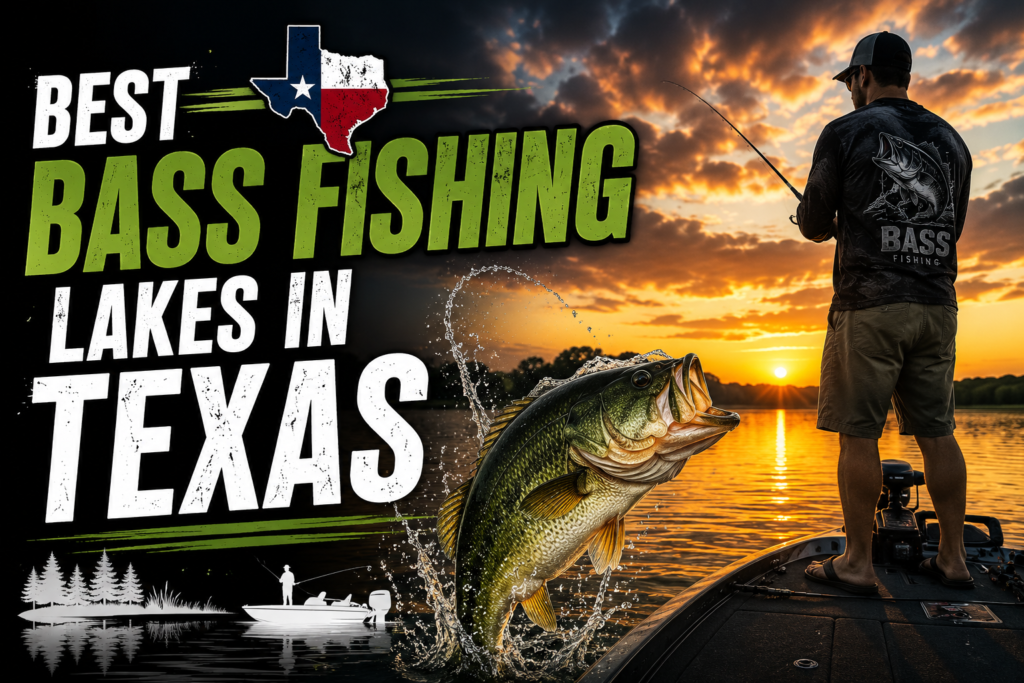
Bass fishing lakes in Texas have big bass like almost nowhere else in the country, and the proof is sitting right there in the record book. The state record largemouth, an 18.18-pound giant, came out of Lake Fork back in 1992 and still has not been topped after more than three decades. So whether you are after your first honest five-pounder or you are chasing a true wall-hanger, Texas Bass Fishing hands you more quality water than most folks could fish in a lifetime.
This guide runs through the bass fishing lakes in Texas that are actually worth planning a trip around. We will get into what each one holds, when to show up, and the baits that tend to earn bites on that particular body of water. Throw a little of everything in the rod locker before you go, because the variety down here is half the fun.
Why Texas Grows Such Big Bass
There is real science behind the reputation, not just tall tales at the boat ramp. Back in the early 1970s, fisheries managers started stocking Florida-strain largemouth into Texas reservoirs, and those fish grew faster and heavier than the native northern strain ever could. Pair that with a long, warm growing season, where bass feed for more months out of the year and pack on weight doing it, and you have the engine behind trophy-class Freshwater Bass Fishing in this state.
Texas took it a step further with the Toyota ShareLunker program, run by Texas Parks and Wildlife. Anglers loan their 13-pound-plus catches to the state during the winter spawn, biologists breed those fish, and the offspring get stocked right back into public water. Decades of that selective work, stacked on top of all those Florida genes, is the reason a double-digit bass in Texas no longer turns heads quite the way it used to. The other big draw is sheer variety. You can flip a jig into flooded timber on a piney-woods reservoir one weekend, then sight-fish gin-clear water on the Rio Grande the next.
Best Bass Fishing Lakes in Texas, Ranked by Reputation
1. Lake Fork – One of the Best Bass Fishing Lakes in Texas
Ask a room full of anglers to name the best trophy lake in the state and Lake Fork comes up first almost every time. This 27,000-acre reservoir near Quitman, roughly 90 miles east of Dallas, is the one that put Texas big-bass fishing on the national map. It holds the state record, and according to Texas Parks and Wildlife, something like 36 of the top 50 largemouth ever weighed in Texas have come from this single lake. The flooded timber, deep creek channels, and a protective slot limit keep the trophy machine running. Big swimbaits and jigs in the cooler months, then flukes and Carolina rigs around the spawn, are how most of the giants get fooled. If you fish only one lake on this list, make it this one.
2. O.H. Ivie (West-Central Texas)
If Lake Fork is the legend, O.H. Ivie is the lake everyone is talking about right now. Sitting east of San Angelo in dry West Texas country, Ivie has been on a historic tear, producing more than 60 Legacy Class ShareLunkers (bass of 13 pounds or better) over the past several seasons. The lake record is a 17.06-pounder caught in 2022, which ranks as one of the heaviest bass in Texas history. The combination of boom-bust water levels, thick flooded brush, and strong Florida genetics grows freaks. Most anglers here are using forward-facing sonar to hunt individual giants and throwing magnum swimbaits, big jigs, and glide baits at them. January through April is prime time. Slow days are common, but the payoff can be the fish of a lifetime.
3. Sam Rayburn (East Texas)
Known affectionately as Big Sam, this is the largest lake entirely inside Texas at roughly 114,000 acres. Old-timers call it the grandfather of Texas tournament fishing, and for good reason. It pumps out both numbers and quality, with a healthy mix of double-digit potential and bags of solid four to six pounders. Vast hydrilla flats and standing timber give bass cover at every depth. In spring, frogging the grass and flipping heavy cover shine, and as summer sets in, offshore anglers load up on deep ledges with Carolina rigs and crankbaits. If you want a bend in the rod all day, Rayburn delivers.
4. Toledo Bend (Texas-Louisiana Border)
Straddling the Sabine River on the state line, Toledo Bend sprawls across roughly 181,000 acres, making it one of the largest reservoirs in the South. Bassmaster has ranked it the number one bass lake in the entire country more than once, and it keeps earning the praise. It is more of a numbers and quality fishery than a trophy factory, but the consistency is legendary, and quality largemouth come from its flooded timber and brush year after year. Worth knowing: the Toledo Bend Lake Association hands out free replica mounts to anglers who catch and release a bass over 10 pounds. Bring a good map, because you can run a long way out here without seeing the same water twice.
5. Falcon Lake (South Texas)
Down on the Rio Grande near Zapata, Falcon is famous for explosive seasons when the conditions line up. The extended South Texas growing season means bass spawn early and stay active for most of the year. Water levels swing dramatically with drought and rain, so the smart move is finding the current shoreline and the brush that comes with it. Flipping and pitching heavy cover is the bread and butter here, and in a strong year it can take five fish averaging five to six pounds just to win a local tournament. Heads up that part of the lake sits in Mexican water, so check the current boundary rules before you launch.
6. Lake Amistad (Southwest Texas)
Out near Del Rio along the Mexico border, Amistad is the clear-water, rocky-canyon change of pace on this list. It spans more than 64,000 acres and holds both largemouth and smallmouth, with a lake record largemouth of 15.68 pounds caught back in 2005. The clarity rewards a more technical mindset: drop shots, finesse worms, and crankbaits worked along rock and brush all produce. As with Falcon, a chunk of the lake lies in Mexican water, so a Mexico fishing license is required if you cross the line. For anglers who like to see the structure they are fishing, Amistad is hard to beat.
7. Choke Canyon (South Texas)
Tucked between Three Rivers and Tilden, Choke Canyon is the sleeper a lot of out-of-staters never hear about. It is a brushy, mesquite-lined reservoir with real double-digit potential and far less pressure than the famous names up north. Flipping flooded brush and working soft plastics through the timber is the move, and spring is when the better fish slide shallow and get catchable. If you want a quality Texas bass lake without the tournament crowds, put this one on your radar.
8. Ray Roberts (North Texas)
Just north of Denton and an easy drive from the Dallas-Fort Worth metro, Ray Roberts is the most accessible big-fish option on this list. The roughly 29,000-acre lake boasts a 15-pound lake-record largemouth and also kicks out quality spotted bass and smallmouth. It even holds the Texas state record for a smallmouth-spotted hybrid, a 6.42-pound meanmouth landed in 2019. For city anglers who want a legitimate shot at a giant without towing the boat halfway across the state, Ray Roberts is the answer.
Matching Techniques to the Water
These lakes ask for different approaches, and the anglers who consistently put fish in the boat are the ones who adapt. A few patterns hold true across most Texas Bass Fishing situations.
On the trophy reservoirs like Lake Fork and O.H. Ivie, going big is the path to a giant. Magnum swimbaits, oversized jigs, and glide baits weed out the small fish and tempt the heavyweights, especially in the cold-water months. On grass and timber lakes such as Sam Rayburn, Toledo Bend, and Falcon, power techniques rule: frogging the salad, flipping heavy cover, and punching matted vegetation all earn reaction bites. And on the clear, rocky water of Amistad and Ray Roberts, finesse wins more often than not. A drop shot, a shaky head, or a small crankbait fished with patience will outproduce flash almost every time. These are the bass fishing techniques that separate a slow day from a good one.
Season matters just as much as location. In spring, bass move shallow to spawn and become far more catchable, which is why the famous Texas lunkers tend to come in late winter and early spring. As summer heat builds, fish slide deeper and you have to follow them down to offshore structures. Fall brings a strong feeding window as bass fatten up ahead of winter, and it is often the most underrated stretch of great fishing all year.
Frequently Asked Questions About Bass Fishing Lakes in Texas
What is the best bass fishing lake in Texas?
Lake Fork earns the top spot for most anglers thanks to its state record, its deep trophy history, and its sheer number of giant bass. For the hottest current bite, though, O.H. Ivie is tough to beat, with dozens of 13-pound-plus fish caught there in recent seasons.
Where can I catch a trophy bass in Texas?
The trophy-class lakes are Lake Fork and O.H. Ivie, followed by deep South Texas waters like Falcon. Most of the true giants come on large swimbaits and jigs during the cooler months, from roughly December through April.
When is the best time of year to fish Bass Fishing Lakes in Texas?
Spring is prime, as bass move shallow to spawn and feed aggressively, and it is when most of the state’s biggest fish are caught. Fall is a strong second, while summer pushes fish deeper and rewards a more patient, offshore approach.
Do I need a license to fish these lakes?
Yes. Anyone 17 or older needs a valid Texas fishing license with a freshwater endorsement, available through Texas Parks and Wildlife. If you fish the Mexican side of Falcon or Amistad, you also need a Mexico fishing license.
What is the best bait for largemouth bass in Texas?
It depends on the lake. On trophy water, a big swimbait or glide bait is your best shot at a giant. For all-around success across most Texas lakes, soft plastics like a Texas-rigged worm or a wacky-rigged stick bait, plus a good jig, will catch fish just about everywhere.
Are there good smallmouth bass lakes in Texas?
Yes, though Texas is a largemouth country first. Clear, rocky water like Lake Amistad and Ray Roberts holds smallmouth and spotted bass, and Hill Country reservoirs such as Belton and Stillhouse Hollow are known for solid smallmouth action.
Conclusion
Texas really is a bucket-list state for anyone serious about chasing bass. From the trophy factories of Lake Fork and O.H. Unlike the tournament-grade numbers at Sam Rayburn and Toledo Bend, the range of Bass Fishing Lakes here means there is always another spot worth exploring. Pick the lake that fits your goal, time your trip around the season, match your presentation to the cover, and you will put yourself in the game on any of these waters.
For more lake breakdowns, seasonal guides, and Freshwater Bass Fishing tips built for anglers who actually spend time on the water, visit Crazy For Fishing and make your next Texas trip your best one yet.
Looking for your next bass fishing destination? Bassmaster recently released its 2026 ranking of the 100 Best Bass Lakes in America, highlighting outstanding largemouth, smallmouth and spotted bass fisheries across the United States. The rankings can be a helpful starting point for anglers planning their next fishing trip.
