
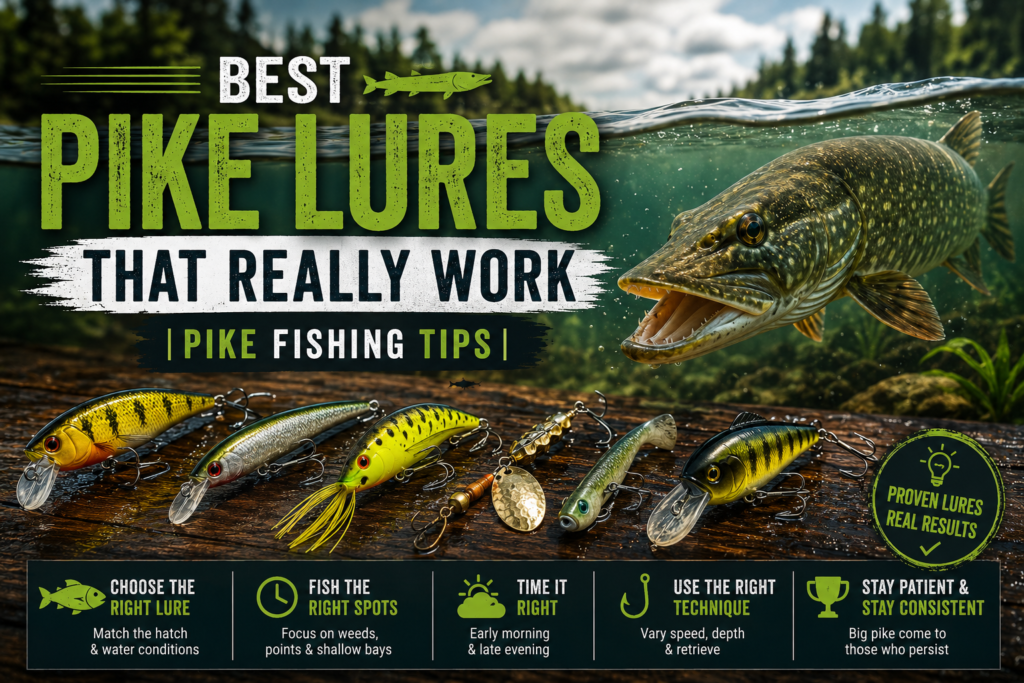
A pike does not nibble. It slams a bait sideways, holds it crossways in its jaw, and only then turns to swallow, which is exactly why so many anglers miss the hookset entirely. That single habit explains more blown chances than bad luck ever could. Finding the best lures for pike is not about stacking a tackle box with everything shiny; it is about matching size, flash, and speed to a fish built to ambush, not chase. Nail that combination and a single spinnerbait will out-produce a boat full of gear. Miss it and you are just casting exercise.
A Predator Built to Ambush, Not Chase
Nearly everything worth knowing about how to catch pike starts with understanding that this fish is a sit-and-wait hunter. Northern pike hold tight to cover, let prey wander close, then explode in a burst that rarely lasts more than a second or two. They are not built for long pursuits, so a lure that stays in the strike zone longer usually beats one that is simply flashier.
That ambush instinct also explains why size matters more than most anglers assume. A pike’s mouth is enormous relative to its body, and it will happily attack prey nearly half its own length. Undersized lures get ignored by big fish more often than people expect, especially once the water warms and pike start keying in on larger forage like perch, suckers, and even small ducklings.
Mood changes the approach the rest of the way. Active, feeding pike in cool water will strike almost anything moving with confidence. The same fish sitting deep and lethargic in the heat of summer wants a slower presentation, a pause built into the retrieve, and a bit more patience from the person holding the rod.
Where Pike Hold: Weeds, Drop-Offs, and Current Breaks
Pike lives near ambush points. Weed edges, submerged timber, rock piles, and the seam where a drop-off meets shallow flats all hold fish, and in most lakes a pike is rarely far from some kind of structure. Early in the season they push into shallow bays to spawn over soft, weedy bottom as soon as ice-out water begins to warm.
Water clarity affects lure choice. In murky water, use larger profiles and bright colors like chartreuse or firetiger. In clear water, natural colors and longer casts work better. Focus your casts along weed edges, where pike often patrol for prey.
A Season-by-Season Guide to Pike Fishing Techniques
The core pike fishing techniques barely change from spring through fall. What shifts is depth, speed, and how much noise a pike will tolerate.
Spring: shallow, slow, and loud
Once shallow bays warm ahead of the main lake, pike move in to spawn and feed hard afterward. Bright, noisy spinnerbaits and slow-rolled swimbaits working just above the weeds trigger reaction strikes from fish that are hungry after a long winter. This is often the easiest stretch of the year for lure fishing for pike, because the fish are shallow, visible, and active.
Summer: chase the depth and the shade
As the water warms, pikes slide toward deeper weed edges, cooler drop-offs, and shaded structure. Early and late in the day they push shallow to feed, so a topwater or a fast-moving spoon can draw violent strikes at dawn and dusk. Midday calls for deeper diving crankbaits or jerkbaits worked along the thermocline.
Fall: active, hungry, and easy to find
Cooling water triggers a feeding push before winter, and pike often school loosely near baitfish concentrations on mid-depth flats. Big swimbaits and jerkbaits shine here, and this is prime season for anyone chasing a trophy, since fall fish feed with far less hesitation than they show in midsummer heat.
Winter: small, slow, and precise
Through the ice, pikes slow down considerably. Large, slow-moving jigging spoons and tip-ups rigged with live bait suspended just above the weeds account for most fish. Strikes are often subtle compared to the violence of an open-water hit, so watching the line matters as much as the lure choice itself.
The Best Pike Lures, Sorted by Type
Five categories of gear cover nearly every situation you will run into on the water.
Spinnerbaits: Noisy, weedless, and forgiving over cover. A large Colorado or willow-leaf blade pushes enough vibration for a pike to find the bait even in stained water.
Spoons: Simple, wobbling metal that has fooled pike for generations. A wounded, erratic retrieve near weed edges is often all it takes.
Jerkbaits: Long, slashing baits that imitate an injured baitfish. The pause between twitches is where most strikes happen, so resist the urge to reel through it.
Swimbaits: Soft-plastic paddle tails on a heavy jig head cover water fast and mimic the larger forage pike prefer once they mature.
Topwaters: Buzzbaits and walk-the-dog style lures fished over calm, shallow water at dawn or dusk produce some of the most explosive strikes in freshwater fishing.
Simple Pike Fishing Gear for Beginners
Use a 6.5–7.5 ft medium-heavy or heavy rod with 30–50 lb braid and a wire or heavy fluorocarbon leader. Pike have sharp teeth, so a strong leader is essential. Keep long-nose pliers and a jaw spreader handy for safe hook removal.
This setup is also why pike fishing draws so many anglers looking to upgrade from panfish gear. The strikes are violent, the fish fight hard, and the tackle rewards confidence far more than finesse.
Pike Fishing Tips That Cost Nothing
Most of the gap between an average trip and a great one comes down to habit, not hardware.
- Slow the retrieve down before you change the lure. A slower presentation of the same bait often beats a completely different one.
- Cast past the target, not at it, especially over shallow spawning bays.
- Pause after every jerkbait twitch. The strike almost always comes on the pause.
- Fish low light for size. Bigger pike feed hardest at dawn, dusk, and on overcast days.
- Match your leader to the water clarity, wire in stained water, fluorocarbon where fish get a longer look.
None of these pike fishing tips will show up on a receipt, but together they outfish a fully stocked tackle box.
Handle With Care, Release the Big Ones
Pike grow slowly, and the biggest fish in any lake are often decades old. Because they sit at the top of the food chain, removing large breeding females can noticeably thin out a population over time. Many fisheries agencies now encourage catch-and-release for trophy-class fish while allowing anglers to keep smaller pike for the table, which helps keep a healthy size structure in the water.
Wet your hands before handling any pike, support it horizontally, and keep the true giants in the water as much as possible during the photo. Regulations vary widely by state and province, so check local limits before your first cast.
Frequently Asked Questions
What are the best lures for pike?
Large spinnerbaits, spoons, jerkbaits, and swimbaits all produce consistently. If you can only carry one, a heavy spoon covers the widest range of conditions.
How do you catch a big pike?
Fish low light, target deeper weed edges and drop-offs in summer, and slow the retrieve down. Trophy fish rarely chase fast-moving bait in warm water.
What pound test line should I use for pike?
A 30 to 50 pound braid with a wire or heavy fluorocarbon leader handles both the fish and its teeth.
When do pikes spawn?
Pike spawn shortly after ice-out, once shallow bays begin warming, usually before most other gamefish become active.
Why do pikes keep biting me off?
A missing or worn leader. Pike teeth cut light lines and fluorocarbons quickly, so check the leader after every fish.
Read the Water, Then Pick the Lure
Nobody masters pike fishing by buying more tackle. Anglers who consistently connect check the same things before every cast: how deep the fish are holding, how clear the water is, what the season demands, and whether the lure truly matches what a pike is hunting that day. Work through those questions and how to catch pike stops being a mystery, because the best lures for pike start choosing themselves. Keep these pike fishing tips in mind through a full season, and Crazy For Fishing helps you make every cast count.
